Friday, December 11, 2009
Final thoughts
All in all I have to say that this class has opened my eyes in many ways. It's not that I was ever overtly apathetic or naively optimistic about the environment and resource depletion, but I just never really... I guess I never actually dwelled upon the subject for any extended amount of time until I took a class on it. I think that having a class for an entire semester that forces you to think about these topics is very valuable as far as making it tangible. It's easy to spend a few seconds thinking about it and then simply say to yourself "ah, those scientists and government people will work it out." But when you actually read up on it (the material provided in the class was actually a really good introduction to several aspects of the issues as well as various perspectives) you come to realize how complex the problem is, and how rooted it is to our culture. In reality, we won't be able to completely rely on such authority figures when it comes time to make the changes in lifestyle that are actually going to be necessary when addressing these issues. The climate and resource crisis that we face is going to require much more than any single miracle cure that we all wish would appear already, and I don't think that the majority of the population understands this. The gigantically wasteful lifestyle that preoccupies industrial society must be re-examined by all of us. Inevitably, politicians and lawmakers are going to have to take steps to correct this, but it is very likely that they will not do so until a constituency for the issue has been established. As citizens, we have to be willing, and make it known that we are willing, to tackle these issues head on and make the changes necessary to achieve a way of life that does not contradict what our environment is capable of providing us with. Because some day, our planet will just get tired of supplying our wasteful ways, and we will be forced to adapt. It's a matter of whether or not we will be prepared for it.

Al Gore's speech
I am glad that Al Gore has dedicated so much of his post-veep efforts toward raising awareness on climate change issues. As former vice president, he obviously has clout, and by staying in the public eye and advocating reform, he is doing a great service for environmental causes. As Richard A. Muller points out in his novel Physics for Future Presidents, the information provided by Gore in his presentations, notably some of the graphs he uses in slide shows, are not always entirely scientifically sound. However, he is never grossly misleading and is an excellent speaker in that he is able to engage his audience and present such information in a manner that is never boring. An Inconvenient Truth was essentially an hour+ speech, but it was laced with enough production value and wit that it was made very accessible to people who may not generally be interested in hearing about these things.
However, he doesn't simply make these issues accessible. He also is able to inspire with rhetoric, which is important in convincing people. During the opening of speech, he asks something to the effect of "how dare we be optimistic?" in the face with a looming disaster that we should be making effort avoid. Later in the speech, he mentions a "culture of distraction" that causes mobilization on these issues to be difficult. He also cites the famous Gandhi quote of "we must become the change we wish to see." One of my favorite quotes of the entire speech is, as he is saying he believes that we can do this if we set our minds to it, when he says if we spent what we spend on the Iraq war every week on environmental efforts, we could make great progress. I think he's right: we may need to rethink our priorities. I'm not saying that we should cut funding in a way that in any way jeopardizes current missions, but I think that our government as a whole could come up with the money to put funding into these important efforts. I also really like when he suggests a carbon tax, an example if a policy that could genuinely motivate efforts to cut emissions.
In his words: "we have work to do." We can't rely on our optimism to save the day, because it simply won't be enough if we as a species continue in our current direction.
However, he doesn't simply make these issues accessible. He also is able to inspire with rhetoric, which is important in convincing people. During the opening of speech, he asks something to the effect of "how dare we be optimistic?" in the face with a looming disaster that we should be making effort avoid. Later in the speech, he mentions a "culture of distraction" that causes mobilization on these issues to be difficult. He also cites the famous Gandhi quote of "we must become the change we wish to see." One of my favorite quotes of the entire speech is, as he is saying he believes that we can do this if we set our minds to it, when he says if we spent what we spend on the Iraq war every week on environmental efforts, we could make great progress. I think he's right: we may need to rethink our priorities. I'm not saying that we should cut funding in a way that in any way jeopardizes current missions, but I think that our government as a whole could come up with the money to put funding into these important efforts. I also really like when he suggests a carbon tax, an example if a policy that could genuinely motivate efforts to cut emissions.
In his words: "we have work to do." We can't rely on our optimism to save the day, because it simply won't be enough if we as a species continue in our current direction.
What I've learned....
This class has definitely been one of the most eye-opening classes I have taken at this University. As a senior, and a Journalism major, I have not had the chance to take many science themed courses. The two science classes I had to take were, in my opinion, boring, mostly because I was forced to take them. This class, however, was a choice I made. The title intrigued me enough. With growing talk about global warming and destruction of the planet, I wanted to take a course that would hopefully educate me on issues such as these.
What I learned in this course is that being green is a complex issue. There were several issues that were brought to light in this class, issues that I never thought had anything to do with the environment. Issues like education, consumerism, politics, all affect our views on going green. Up until now, I believe that recycling was good enough to save our planet. After this class, I'm not even sure if saving our planet is even a plausible idea.
One of the things I liked most about this class was that there were always two sides to everything. While we talked about statistics that clearly show that human activity is negatively impacting the planet, then we read an article where the writer states that scientists have been known to cherry pick information to prove their ideas. So who is there to believe? The class always kept me thinking, just when I agreed with one thing, a reading or someone's comment would make me think something else.
More importantly, one of the main things I have learned is that you need to research information for yourself. Do not take other people's information, no matter what official position they are in, at face value. People are filled with prejudices and opinions, it is up to us to seek information, make what we want of it, and make our own informed decisions. Saving the planet is an unfathomable task. After all the time we have manipulating the environment and doing as we please, we are realizing that there are effects to that. Being green is a task that requires constant attention. If you do not think about where that bottle of water is going to go, where those bananas came from, then we will never be able to protect our planet. As I mentioned, these things have become second nature to us, and it is easy to forget how beef is processed, easy to forget that years ago eating meat was not as commonplace as it is today.
As a global community, if we just mentally engage ourselves I believe that we can save ourselves and each other. But in an age where attention span is only as long as a 30-second commercial, that task seems impossibly impossible.
Last Blog Post- Farewell
To summarize my experience in this class, I would have to start with the phrase "eye-opener", for this phrase sums up better than any other what I have learned here. Before this class, I was totally oblivious to many of the topics we have discussed. I never thought about energy, in my home, dorm, the United States, or the globe. Believe it or not, I never even knew that oil was running out, and especially not that I may witness this phenomenon in my days. I never knew the extent of the Earth's many cycles and the great effect that we have on all of them. I now know the crisis, that I, my family, my country, and my species faces in the near future. I now know how to save myself and I will pass this information on to all of my loved ones, friends, and family. I know what can be done to help in this effort and how essential change is and will be. I look to continue researching what I learned here in this class and I hope that we will all continue to blog and communicate new discoveries to each other because as we have learned, it will be through cooperation and awareness (with a little sense of urgency) that we can tackle these challenges.
On the class itself, I really enjoyed the format, teaching style, and classroom layout. I, rarely sit in the front in any classes, but I was forced to in this class. That uncomfortableness coupled with a genuine interest and shock in the topic presented, lead me to gather and absorb the wealth of information provided. As for changes in the class, I would suggest none of the top of my mind- the open ended nature of the blogs is great and the in-class movies and readings assigned all supported what we learned. Professor Hirsch has been very helpful and inspiring, as have my classmates.Thank you all and have a great winter break.
On the class itself, I really enjoyed the format, teaching style, and classroom layout. I, rarely sit in the front in any classes, but I was forced to in this class. That uncomfortableness coupled with a genuine interest and shock in the topic presented, lead me to gather and absorb the wealth of information provided. As for changes in the class, I would suggest none of the top of my mind- the open ended nature of the blogs is great and the in-class movies and readings assigned all supported what we learned. Professor Hirsch has been very helpful and inspiring, as have my classmates.Thank you all and have a great winter break.
DesignLine Buses Back Home in NYC
 (Image from nytimes.com)
On a local note, for me, I am glad to see some small steps made by my home city. NYC has created even newer buses to be used throughout the city. These new buses, while expensive (around 560k each), are more energy efficient and environmentally friendly, and add a nice plus of being totally silent. I am yet to ride on one, but I will be sure to travel on one as I visit the tree, in Rockefeller Center, this coming Christmas.
These buses do not come with a performance deficit, which may be a concern for many with "green" machines and vehicles: “I never drove anything that accelerates like this,” Mr. Sollecito, who has driven city buses for 15 years, said approvingly, as the bus glided along the street jerk-free."
"Silence, that rare commodity on the city streets, is achieved by throwing out the most basic element of automobile design: internal combustion. Instead of a noisy, piston-based engine, the DesignLine operates on a spinning turbine that recharges a lithium-ion battery, a green energy source more commonly found inside laptop computers. That means fewer moving parts, and fewer ways to create a racket."
I am shocked that these buses can be using a Lithium-ion battery, I had no idea of the potential power of battery sources, to power a large, heavy bus seems almost absurd to me. The battery recharges every time the driver hits the brakes, and with traffic in the city, this is a great feature.
"Maria Principe, an Upper East Sider, took a seat near the front after boarding just north of 42nd Street, where she had been shopping at Willner Chemists, an upscale pharmacy. “It feels like the air is cleaner, lighter,” she said" - These buses if mass-produced throughout the city and eventually the country can make a significant reduction in our country's carbon emissions.
Carbon Emission from Cars:
"About 33% of U.S carbon dioxide emissions comes from the burning of gasoline in internal-combustion engines of cars and light trucks (minivans, sport utility vehicles, pick-up trucks, and jeeps)" -www.ecobridge.org
These are the kinds of small changes that will add up. Maybe if buses were more quiet, comfortable, cheaper to ride, and energy and environmentally friendly, then more people would use public transportation and ditch the one-person-one-car standard we currently have in this country.
Reference:
1.http://www.nytimes.com/2009/12/07/nyregion/07bus.html?ref=earth
2.http://www.ecobridge.org/
Europe Pledges to Give Billions
The European Union (EU) pledged to give billions in aid to poor countries in the effort to stop global warming. They will initiate, by giving $3 billion, this coming year to countries in need. In reference to the Hopenhagen Conference, Brown Said "Mr. Brown said there were “few moments in history when nations are summoned to common decisions that will reshape the lives of men and women potentially for generations to come.”
"Yvo de Boer, the head of the United Nations climate office, has called on industrialized nations to give $30 billion fund to the fund in order to help vulnerable countries to begin planning massive engineering projects like building higher sea walls and converting their electricity systems so they rely on low-carbon sources." - it seems that the European Union is taking this very seriously, but I am yet to find a response from the United States.
The worlds nations set a goal of limiting warming to 2 degrees Celsius above where they stood in the 1800s. Although this may seem simple, is not an easy task. I hope to see the United States propose some kind of plan for our country, whether it be in the aid of other, less fortunate countries, or at the home-front- drastically changing things here in the United States in regards to energy and resource management. I think that efficiency programs should be the first step and from there a total re-invention of the way we use and distribute energy in our country.
Reference:
1. http://www.nytimes.com/2009/12/12/science/earth/12climate.html?ref=earth
"Yvo de Boer, the head of the United Nations climate office, has called on industrialized nations to give $30 billion fund to the fund in order to help vulnerable countries to begin planning massive engineering projects like building higher sea walls and converting their electricity systems so they rely on low-carbon sources." - it seems that the European Union is taking this very seriously, but I am yet to find a response from the United States.
The worlds nations set a goal of limiting warming to 2 degrees Celsius above where they stood in the 1800s. Although this may seem simple, is not an easy task. I hope to see the United States propose some kind of plan for our country, whether it be in the aid of other, less fortunate countries, or at the home-front- drastically changing things here in the United States in regards to energy and resource management. I think that efficiency programs should be the first step and from there a total re-invention of the way we use and distribute energy in our country.
Reference:
1. http://www.nytimes.com/2009/12/12/science/earth/12climate.html?ref=earth
Parents Going Organic
I’ve worked in a retail store that specializes in products for babies and expectant mothers for seven years. And it is here that I personally witnessed the growth in popularity organic products have in today’s world. I honestly can’t remember one organic product being sold in the store when I first started working there in 2001. When I left, I would estimate that at least a quarter of our store was organic, including baby mattresses, cribs and other products. The demand for these products was increasing with time. As an employee for seven years, I could personally witness the molding of products into ones in which safety became a number one priority. These organic products not only became a safety precaution but also a trend. Advertisements flourished in magazines that targeted new mothers or mothers to be. And almost every baby shower registry registered with our store contained organic products. But parents need to realize that going organic for your child is not as easy as purchasing organic products.
Former mattresses that had a reputation of excreting harmful chemicals were replaced by organic mattresses made of organic cotton and coconut fibers. While organic mattress contain no harmful material or chemicals, precautions have to be taken in order to prevent the mattress from getting wet. This can prove to be a difficult task when the mattress is supporting an infant who spits up, occasionally has a leaky diaper and drools. If any liquid comes into contact with the mattress it can become a breeding ground for bacteria.
Soon after, companies began constructing organic cribs. These cribs were furnished with beeswax instead of the traditional wood stain and gloss. Although the organic cribs cost about double what a traditional crib would, by purchasing one, you are eliminating the possibility of your child being exposed to harmful chemicals. This usually occurs when a child starts teething. A child finds comfort in biting objects, and when left in the crib for an while, the child has a tendency to bite on the rail of the crib. It is then possible that the child may be ingesting particles of wood finish. Other people argue that a child can be exposed to toxic fumes leeching from the stains on the wood. To solve this problem, companies began construction organic cribs. But unlike traditional cribs, these cribs require the parents to reapply the beeswax coating by hand a few times a year.
I decided to write a blog about this topic because it is one I have a true passion for. Over the last seven years, my job was committed to educating new parents about new products and new ways of raising a healthy child. If going organic wasn’t a expense that some parents just can't support, I would without a doubt do my best to convince every parent to raise not only your child, but your family in a organic way. But the realization that sacrifices will be made, whether its time or money, needs to be understood by the parent. People must realize that going organic is a great opportunity, but requires commitment, knowledge and money to make it a successful process.
Goodbye ABIO 230
ABIO 230 finally gave me supporting evidence behind my already "hippy" way of thinking that I would preach but never had anything resourceful to say on the matters. I remember last year I was standing outside a corner store on a late Saturday night and a college kid threw his sandwich container right next to him when there was a trash can only two seconds from him. I picked it up and threw it away and he said
"Oh, you are one of THOSE people." This class gives me the opportunity to say yes, I am one of those people, the type of person that actually cares about what is going on in the world and acknowledge all the evidence that is blatantly in our faces. I want to be one of those people that makes a difference, not to save the world on my own but to carry on information that can possibly change some of the ways of thinking in this world. I am a firm believer that to be educated on certain topics you should not dispose of it when the semester is over but to retain that information and share that knowledge. That is how we become teachers to others who have not had an opportunity to be in a class such as ABIO 230 that we actually have some tiny power in this universe.
Everyday after class my boyfriend would pick me up to hang out and I would unload everything I learned that day on to him. We would have discussions that even sometimes would turn in to debate but just having these chats would open his eyes as well as mine. The reason it opens my eyes is that even if you have information you strongly believe in like any debate like the gay rights movement or the females right to abortion you will have opposing forces. After we had our lecture on THE END OF SUBURBIA I was talking to my boyfriend on our desperate need to stop our dependence on fuel and his reply was that there is no possible way, that science and technology will take its course and find a new way; it's out of our hands. This debate went on for a while but in the end we stuck to our sides and I think that basically sums up how the United States is comprised of, two sides of an issue and no one is losing or winning just stuck. Sometimes this makes me sad that I do feel powerless in the way that we can not get anywhere if everyone is not in it together. So I think having classes like ABIO 230 is a small step in the right direction, changing the thinking of stubborn Americans slowly but in our case very surely. I do not think that there is one person in our class that does not believe in the things we have covered, like me they want change.
So in the end I will really miss this class but the knowledge I have acquired will not be lost I will be putting that forth to how I live my everyday life. I hope for the improvement of how Americans live their lives and that one day we will all be in it together. For now I will settle with just myself being a step further than those people and maybe one day they will start to follow.
"Oh, you are one of THOSE people." This class gives me the opportunity to say yes, I am one of those people, the type of person that actually cares about what is going on in the world and acknowledge all the evidence that is blatantly in our faces. I want to be one of those people that makes a difference, not to save the world on my own but to carry on information that can possibly change some of the ways of thinking in this world. I am a firm believer that to be educated on certain topics you should not dispose of it when the semester is over but to retain that information and share that knowledge. That is how we become teachers to others who have not had an opportunity to be in a class such as ABIO 230 that we actually have some tiny power in this universe.
Everyday after class my boyfriend would pick me up to hang out and I would unload everything I learned that day on to him. We would have discussions that even sometimes would turn in to debate but just having these chats would open his eyes as well as mine. The reason it opens my eyes is that even if you have information you strongly believe in like any debate like the gay rights movement or the females right to abortion you will have opposing forces. After we had our lecture on THE END OF SUBURBIA I was talking to my boyfriend on our desperate need to stop our dependence on fuel and his reply was that there is no possible way, that science and technology will take its course and find a new way; it's out of our hands. This debate went on for a while but in the end we stuck to our sides and I think that basically sums up how the United States is comprised of, two sides of an issue and no one is losing or winning just stuck. Sometimes this makes me sad that I do feel powerless in the way that we can not get anywhere if everyone is not in it together. So I think having classes like ABIO 230 is a small step in the right direction, changing the thinking of stubborn Americans slowly but in our case very surely. I do not think that there is one person in our class that does not believe in the things we have covered, like me they want change.
So in the end I will really miss this class but the knowledge I have acquired will not be lost I will be putting that forth to how I live my everyday life. I hope for the improvement of how Americans live their lives and that one day we will all be in it together. For now I will settle with just myself being a step further than those people and maybe one day they will start to follow.
We need to green up our economy!
Since the economy has taken a downturn, I've observed that the business news industry has kept very busy. Suddenly, the front pages of our newspapers are littered with news stories on the stock market, financial institutions like Freddie Mac (a home loan mortgage corporation) and Fannie Mae (a stockholder owned enterprise). In recent years we've learned that financial institutions, although they seem so out of our lives, are actually possible of affecting our lives in big ways. This can be seen in the rate of foreclosure, which has been on the rise since the recession began. Realtytrac.com, a site that reports foreclosure rates, reported a 5% increase this month ( http://www.realtytrac.com/foreclosure/foreclosure-rates.html ).
Although the recession has hit hard, there has been a sector of the economy that has been flourishing, the green economy. Speaker Gary Kleppel mentioned to the class during his presentation that in New York City, Harlem was seeing community gardens develop. I think that during this time, small businesses especially could flourish by offering "green" services. Continuing to plant community gardens, selling fair trade products in our stores, constructing "green roofs" (a green roof is a building that has vegetation on top of the roof, its benefits are reducing the cost of heating, reducing storm water, and filtering out pollutants), etc. These are all things we could do to perpetuate a green economy.
Simultaneously, we would be creating jobs. Unemployment rates that have been reported fluctuate, and many claim that the real figure is unknown. Yet what we do know is that unemployment is on the rise.
A green economy will create jobs while saving the planet. Green economies will force us to work within our own communities and reduce transportation costs, one of the major issues we have with oil dependancy. Imagine, if every state increased its support of green economies, the entire United States would be greener in no time. Localizing our communities will also reduce the amount of power that the government has on our lives. Because we trust to the government to protect us and do what is right, we have been screwed over, for lack of a better term.
In California, the California Academy of Science has opened a green museum (http://www.calacademy.org/). This is another benefit, with the creation of green museums we can educate and create excitement for going green. Children could especially benefit from an early education in going green. Since children are the future, it is important to keep them in mind when making decisions about the future.
From the perspective of an unreasonable life
From reading Ferenc mate's A reasonable life I got the impression that our modern way of living has given us a false sense of progress. This idea is backed by the evidence of environmental damage brought on by or contemporary lifestyle. In the reading mate suggests that a change in thinking from big cities to small towns and the family will lead us to a more wholesome relationship with each-other and the earth itself. I feel that while this is correct, it is much less likely to occur than simply, the perpetuation of the status quo. In order for people to shift from living in big cities to closer knit communities a total paradigm shift is necessary. today peoples lives and the economy are kept going by the perpetuation of the cycle of consumption as put forward in "the story of stuff". This lifestyle and the propaganda that has lead us here has successfully incorporated itself into American culture and therefore is passed down from parent to child. No longer is it possible to expect a change in thinking by simply changing the propaganda. In order to make an effective break from our present course, our entire culture must be altered. For an example, our Christian american culture celebrates a holiday known as Christmas. This holiday was created by the early church to compete with pagan winter solstice festivals an to convert heretics. This is why we bring life into the home as the Christmas tree and other assorted traditions. The present day American tradition of Christmas has been hijacked by our consumer culture to be the day that keeps people buying things they don't want in order to keep businesses in the black (black Friday). The idea of peace on earth or within a family is attained only when all the little brats of this country are satisfied with there parents purchases. Good will is spread by maxing out credit cards in order to get everyone you know something they are unlikely to want and will probably return for another thing they barely want. This perversion of the original altruistic intent of such holidays has contributed to our modern American culture and in order to change our path toward destruction, we must all agree that this behavior is destructive. Now this is where I see it all falling apart, Try and take this away from people and see how they react. They probably understand why there actions are damaging, but it would be un-American to do things any other way.
Copenhagen: A Green City

Copenhagen is the step in the right direction that every city needs, especially in the U.S. It is immediately apparent when visiting the city, one of the first things one would notice would be the large number of wind turbines. These wind turbines represent 20% of Denmark's electricity, according to a New York Times article. There, an endless wave of bikers will also be seen- as this, along with Public Transportation, is the main form of transportation in this city.
This year at the conference, the christmas tree in the city's square is powered by stationary bikes setup for viewers! This is an amazing idea. The city even imposes fines on shopkeepers who let excessive heat slip from their building through unnecessarily opened doors, windows, etc. These are the little things that we need here in America, back by legislature and laws, and it is only with the drive and push of the people to their elected officials that these demands will be met. Bottled water has been banned from the conference. More organic foods are consumed in Copenhagen than in any other city across the globe.
This seems like the city that we, the students of this class, would build in a new light shed by the knowledge we have obtained. I believe that there can be even greener cities created, without a doubt, and I would hope to see one in the United States sooner than later.
References:
1. http://www.nytimes.com/2009/12/11/science/earth/11notebook.html?_r=1&ref=earth
2. http://planetgreen.discovery.com/travel-outdoors/copenhagen-city-guide.html
Hopenhagen: The United Nations Climate Change Conference

In the midst of the finale to this semester, and to this class, which I know has been an eye-opener to many of us, there is a conference currently underworks that will seek solutions to many of the issues we have discussed. This conference is the Hopenhagen conference. It is being held in Copenhagen, Denmark - which is one of the "greenest" and energy efficient cities in the world. From the Hopenhagen website, it introduces itself in this matter: "this conference is thought to be the last major chance the world has to decide on a concrete and effective plan for reducing carbon emissions. It’s also an amazing opportunity for humanity and the planet." The conferences will occur from Dec 07. - Dec 18, 2009.
The main goal of this series of conferences is to limit global carbon emissions and minimize the effects of climate change, that is surely to occur if we do not change.
Some background information as to why this conference is being held now, as listed by the website:
"Why Now?"
"In 2012, the Kyoto Protocol to prevent climate change runs out. COP15 is the final chance for the world’s leaders to meet before the climate agreement needs to be renewed. What’s more, the protocol needs far more than a refresh. Since the conference in Kyoto, global carbon dioxide emissions have increased to a record 31.5 billion metric tons. That’s 40% above levels in 1990, the basis year for the treaty."
There are 192 countries that are currently involved in the talks. It is good to see a global effort and the cooperation of our species to tackle this obstacle and ensure the perseverance and prosperity of our species. Using the website to gain some introductory information, I will look to the news and blogs/videos to follow-up on the progress being made- I suggest we all do for Hopenhagen will affect all of us. Hopenhagen: Population 6.8 billion, this was the header to one of the websites pages- it provides a strong message for our planet's population: That we all are part of Hopenhagen, and the resulting change our species will witness- all in the hope and preservation of our one planet, our Gaia, our Earth.
REFERENCE:
1. http://www.hopenhagen.org/learn
Adios!
Hey 230, the semester's gone by so quickly. I can't believe its really over. One exam and I'm out of here!
I guess i just want to say that I've learned so much from you all and from Professor Hirsch. Thank you for sharing your opinions and experiences with me.
Happy Holidays!
Jasmine
The New American Diet
I typically browse on menshealth.com once a day to check-out any health or exercise related articles. Maybe, now, having taking this class, I can justify and attribute reading online articles to being "green" conscious and not just because I do not have the money to buy magazines. Nonetheless, yesterday I found an interesting article about a book title The New American Diet by Steve Perrine and Heather Hurlock. Menshealth presented this book to represent a code of laws: the laws of "Leanness". As I continued to read, I realized these laws have been the very nutritional knowledge we have discovered this semester in this course.
The Law of Leanness #1: Know When to Go Organic
the focus of this law is the avoidance of harmful substances used in traditional farming and animal raising. Everyday we are ingesting harmful pesticides and metabolites through the foods and liquids we eat and drink. "Some of those chemicals can mimic estrogen during development, which can lead to weight gain later in life" - Sound's like Professor Hirsch wasn't joking around with saying that many of the foods we eat today are "feminizing" us men. Evidence is showing that exposure to these chemicals earlier in life may lead to problems later in life. "At the University of California at Irvine, Bruce Blumberg, Ph.D., recently reported that prenatal exposure to obesogens among mice can predispose them to weight gain later in life. The effect is likely the same in humans. In one study, the adult daughters of women who had the highest levels of DDE (a breakdown product of the pesticide DDT) in their blood during childbearing years were found to be 20 pounds heavier, on average, than daughters of women who had the least." It seems that what we eat now IS important and the sooner we change, the better. These chemicals are called "OBESOGENS" in this article. I could not think of a better term!
On a more positive note the article continues by mentioning some hope: "Environmental Health Perspectives found that children who ate fruits and vegetables free of organophosphorous pesticides for just 5 days reduced their urine concentrations of those pesticides to undetectable levels." Some other ways to limit our pesticide intake is to "Go Organic" on the most pesticide ridden fruits, they are as follows: peaches, apples, bell peppers, celery, nectarines, strawberries, cherries, kale, lettuce, imported grapes, carrots, and pears. Another way to limit pesticide intake is to eat more of these fruits and vegetables, which are said to have the least pesticides: onions, avocados, sweet corn, pineapples, mangoes, asparagus, sweet peas, kiwis, cabbages, eggplants, papayas, watermelons, broccoli, tomatoes, and sweet potatoes.
The next section in this article is the Law of Leanness #2: Stop Eating Plastic- this was an interesting view and I suggest you read it.
Following this section was the the Law of Leanness #3: Don't Eat the Viking
This section starts by saying:When was the last time you took a dose of weight-promoting hormones?
Okay, when was the last time you ate a burger?
The meat many of us eat is a cocktail of obesogens and hormones."A 1999 European study concluded that people who eat meat from cattle treated with growth hormones are taking in hormones and their metabolites: estrogens in the range of 1 to 84 nanograms per person per day, progesterone (64 to 467 ng), and testosterone (5 to 189 ng)." These hormones are endocrine disrupters and interfere with our normal hormonal balance, leading to obesity along with other problems.
"To bring this all home, imagine you've been in a terrible plane crash in the Andes, like those poor souls depicted in the movie Alive. The only way to survive is to pick one of the dead folks to eat. You're given the choice of an obese, grotesquely muscled, man-boob-toting Minnesota Vikings lineman with shrunken testicles who's been injecting himself with hormones for a dozen years, or someone of normal size and body type and hormonal function. (One of the Kardashian sisters, maybe.) Which would you choose?
Well, every time you eat conventionally raised beef, you're choosing the Viking." - I found this humorous but it gives a visual perspective to the kinds of effects these hormones can have.
Once again hope is put before us. The article goes on to list the benefits of organic and grass fed beef:There's a better way. "Organic beef has none of the weight-promoting steroid hormones of conventional beef, while grass-fed beef has been found to have more omega-3s and more conjugated linoleic acid (CLA). CLA is a fatty-acid mixture that's been linked to protection against cardiovascular disease and diabetes; it can also help you lose weight, according to a meta-analysis in the American Journal of Clinical Nutrition."
The final section, the Law of Leanness #4, goes on to describe some negative effects of soy? I was unaware of this information and also some not-so-new news in the form of HFCS, or High Fructose Corn Syrup.
This information was less shocking after taking this course, but I know that many people are unaware of this phenomenon. Fighting for organic and locally grown foods in our University and school systems across NY should be pursued for the health and prosperity of our populations.
REFERENCE:
1. http://menshealth.com/new-american-diet/lose-weight2.html
The Law of Leanness #1: Know When to Go Organic
the focus of this law is the avoidance of harmful substances used in traditional farming and animal raising. Everyday we are ingesting harmful pesticides and metabolites through the foods and liquids we eat and drink. "Some of those chemicals can mimic estrogen during development, which can lead to weight gain later in life" - Sound's like Professor Hirsch wasn't joking around with saying that many of the foods we eat today are "feminizing" us men. Evidence is showing that exposure to these chemicals earlier in life may lead to problems later in life. "At the University of California at Irvine, Bruce Blumberg, Ph.D., recently reported that prenatal exposure to obesogens among mice can predispose them to weight gain later in life. The effect is likely the same in humans. In one study, the adult daughters of women who had the highest levels of DDE (a breakdown product of the pesticide DDT) in their blood during childbearing years were found to be 20 pounds heavier, on average, than daughters of women who had the least." It seems that what we eat now IS important and the sooner we change, the better. These chemicals are called "OBESOGENS" in this article. I could not think of a better term!
On a more positive note the article continues by mentioning some hope: "Environmental Health Perspectives found that children who ate fruits and vegetables free of organophosphorous pesticides for just 5 days reduced their urine concentrations of those pesticides to undetectable levels." Some other ways to limit our pesticide intake is to "Go Organic" on the most pesticide ridden fruits, they are as follows: peaches, apples, bell peppers, celery, nectarines, strawberries, cherries, kale, lettuce, imported grapes, carrots, and pears. Another way to limit pesticide intake is to eat more of these fruits and vegetables, which are said to have the least pesticides: onions, avocados, sweet corn, pineapples, mangoes, asparagus, sweet peas, kiwis, cabbages, eggplants, papayas, watermelons, broccoli, tomatoes, and sweet potatoes.
The next section in this article is the Law of Leanness #2: Stop Eating Plastic- this was an interesting view and I suggest you read it.
Following this section was the the Law of Leanness #3: Don't Eat the Viking
This section starts by saying:When was the last time you took a dose of weight-promoting hormones?
Okay, when was the last time you ate a burger?
The meat many of us eat is a cocktail of obesogens and hormones."A 1999 European study concluded that people who eat meat from cattle treated with growth hormones are taking in hormones and their metabolites: estrogens in the range of 1 to 84 nanograms per person per day, progesterone (64 to 467 ng), and testosterone (5 to 189 ng)." These hormones are endocrine disrupters and interfere with our normal hormonal balance, leading to obesity along with other problems.
"To bring this all home, imagine you've been in a terrible plane crash in the Andes, like those poor souls depicted in the movie Alive. The only way to survive is to pick one of the dead folks to eat. You're given the choice of an obese, grotesquely muscled, man-boob-toting Minnesota Vikings lineman with shrunken testicles who's been injecting himself with hormones for a dozen years, or someone of normal size and body type and hormonal function. (One of the Kardashian sisters, maybe.) Which would you choose?
Well, every time you eat conventionally raised beef, you're choosing the Viking." - I found this humorous but it gives a visual perspective to the kinds of effects these hormones can have.
Once again hope is put before us. The article goes on to list the benefits of organic and grass fed beef:There's a better way. "Organic beef has none of the weight-promoting steroid hormones of conventional beef, while grass-fed beef has been found to have more omega-3s and more conjugated linoleic acid (CLA). CLA is a fatty-acid mixture that's been linked to protection against cardiovascular disease and diabetes; it can also help you lose weight, according to a meta-analysis in the American Journal of Clinical Nutrition."
The final section, the Law of Leanness #4, goes on to describe some negative effects of soy? I was unaware of this information and also some not-so-new news in the form of HFCS, or High Fructose Corn Syrup.
This information was less shocking after taking this course, but I know that many people are unaware of this phenomenon. Fighting for organic and locally grown foods in our University and school systems across NY should be pursued for the health and prosperity of our populations.
REFERENCE:
1. http://menshealth.com/new-american-diet/lose-weight2.html
Thursday, December 10, 2009
Renting Christmas Trees
Some of us participate in the holiday tradition of going out to a christmas tree farm with the family, finding the perfect tree, and cutting it down to bring it home to decorate. Although this is one of my personal favorite holiday traditions, times are changing and we need to make smarter decisions and learn to preserve our trees. Some companies are jumping in and offering new ways to have a “green” Christmas. A few companies are now offering to 'rent out' Christmas Trees for the holidays. For an affordable one hundred dollars, you can go online and pick out the perfect looking tree for your home. These companies will then deliver a Christmas tree to your home, set it up and then come pick it up after the holidays. This tree is then taken back to the farm and replanted. I heard about this on the radio while I was driving to work and it seemed like a brilliant idea! Although it may seem to late to look into renting a tree this Christmas, I urge people to consider this for Christmas's in the future. Happy Holidays!
http://www.livingchristmastrees.org/
http://www.msnbc.msn.com/id/6753079/
Wednesday, December 9, 2009
The problem with choice
Taking what I've learned from Golman's "ecological intelligence" and goodguide.com I have learned that in today's marketplace choice is the main obstacle to solving our ecological problems. In Golman's article he states that not only do we have to look at a products carbon footprint, we must also look at the various other ecological impacts of these goods. After reading this I was left with an anxious feeling, because if I know anything about the general public and there shopping habits we are all in a lot of trouble. Then we were introduced to goodguide.com which lays it all out in a concise easy to understand format. I went home and explored the site, curious to see what impact the products I enjoyed had on the environment. To my dismay I found that either they were not on the site, or they were given a horrible score due to there unhealthy quality. I already know that coca cola has a lot of sugar, what I'm more interested in is its ecological or social impact. I don't even buy unhealthy products that often, but when I do I would like to know what to steer clear of. No is what I was told by this site, I must never buy unhealthy products. Okay I won't, but what about the other things I shop for such as fruit, chicken, vegetables, bread, eggs, milk, butter. All these products have varying impacts depending on where they come from and what companies are involved in getting them to the grocery store. Well thanks goodguide.com, you have proven yourself completely useless to me. This doesn't mean the site is completely useless, it just means I'm the wrong person to ask. So I asked a friend of mine to write down a grocery list of everything they would buy, either by standard need, or impulse. I found that apart from the same stuff that I would buy it consisted of a bunch of pre-made packaged food which everyone knows is bad for you. Okay, so back to square one. What do I believe will cause people to chose a more ecologically friendly lifestyle. The first way is to spend a great deal of time and energy educating everyone who goes grocery shopping, or just spell it out for people "EVERYTHING YOU LOVE IS KILLING THE PLANET". I don't think the second way would have much impact.
Tuesday, December 8, 2009
Ishmael Blog
I first came across Daniel Quinn's "Ishmael" two years ago, when a roommate lent me her copy. She had taken a class with Prof. Hirsch before, I don't know the name of that course. After reading it, my roommate raved about how much she loved it and how interesting it was. I took her advice and read the book to find out for myself. I found that I was just as enthralled as she was with "Ishmael." It is an unexpected story that holds several wisdoms, I have since then recommended the book to all my friends. Three of them have actually read it, and they all loved it as well.
The three quotations I chose are-
1. "What exactly does it mean to live like a lion or a wombat?" "It means. . . to live at the mercy of the world. It means to live without having any control over your environment." (p.68)
2. "Funny. . . This is considered almost holy work by farmers and ranchers. Kill off everything you can't eat. Kill off anything that eats what you eat. Kill of anything that doesn't feed what you eat." (p.132)
3. "The story the Takers have been enacting here for the past ten thousand years is not only disastrous for mankind and for the world, it's fundamentally unhealthy and unsatisfying. It's a megalomaniac's fantasy , and enacting it has given the Takers a culture riddled with greed, cruelty, mental illness, crime, and drug addiction." (p.147).
"Ishmael" was an eye-opening book for various reasons. In biological terms, "Ishmael" opened my eyes to the ways we treat the planet due to our selfish belief that this planet is ours to do what we want with. Human have evolved and dominated the planet, manipulation their settings wherever they go to make these places "home." Human have disregarded other species and the environmental havoc they wreak when they chose to settle in an area. Species have gone extinct due to over-hunting, the land becomes dry and non-arable. Gonick and Outwater, in their comic book style book- "The Cartoon Guide to the Environment," discuss the ancient civilization of Sumer. Sumer was the first great civilization, artifacts from the period show us that the Sumerians built homes and complex irrigation systems. The irrigation systems resulted in water picking up salt and being distributed to the soil, making it infertile. In "Ishmael" the Gorilla teaches the Narrator that humans have little to no concern about the biological processes and life on Earth. Humans are willing to sacrifice life in order to establish their dominance and live comfortably.
About the WORLD, I learned that humans are disrespectful creatures. They have a selfish mentality. All the damage we have caused to the Earth is irrelevant because it has allowed us to live as we do now, this is one of the main themes in "Ishmael," I believe. The Takers, as the humans are called, feel entitled to control over the planet. They assure their power by creating food surpluses and continuing to populate the Earth. Medical advances and development of technology has ensure longer life spans and a guaranteed comfortable life for ourselves and our offspring.
"Ishmael" made me realize that it is wrong for the Takers to have such a ridiculous sense of entitlement. As the Gorilla tells the Narrator, the story of Adam and Eve eating the forbidden fruit in the Garden of Eden is a story by the Leavers (the other species on the Earth) that was taken by the Takers as their own. It is really a story about the "sinful" act committed by humans that has doomed them to eventually self-destruct. In trying to gain knowledge, the Takers have made their fate worse. Man was not meant to know how to control the Earth, they were meant to simply live in it. I believe this is one lesson the Gorilla sought to teach the Narrator. I have learned to see the ways that humans use to maintain power over everything else on the Earth. I have learned that man is willing to control the Earth by any means necessary, at the expense of the Earth itself. And most importantly, I have learned to appreciate nature and the beautiful patterns and cycles of life that exist there because that is how it was meant to be.
BIO230 is the perfect course to discuss "Ishmael" in. Some of the common themes between the book and the course are- humans degrading the Earth for their own selfish benefit, a lack of regard for the planet and other species, and ignorance on the part of humans toward other living things that has resulted in a culture where human believe they are entitled to materialistic lifestyles.
NY Times piece about a young woman getting e.coli from a hamburger
http://www.nytimes.com/2009/10/04/health/04meat.html
On October 3, 2009, the New York Times published a story about a young woman named Stephanie Smith who got ill from e.coli poisoning. Smith was a dance instructor, at only 22 years old she is now paralyzed from the waist down because her body reacted so badly to the particularly virulent strand of e.coli. NY Times reporter Michael Moss writes, "Then her diarrhea turned bloody. Her kidneys shut down. Seizures knocked her unconscious. The convulsions grew so relentless that doctors had to put her in a coma for nine weeks. When she emerged, she could no longer walk. The affliction had ravaged her nervous system and left her paralyzed."
I came across this story because I had to read it for another class, Public Affairs Journalism. Although in our course we often talk about issues affecting the planet and society, it wasn't until I read this in Public Affairs class that I realized what DANGER we put ourselves in. As a journalism major, I want to write about events to raise public awareness. That is what interests me the most about a journalist's job.
On October 3, 2009, the New York Times published a story about a young woman named Stephanie Smith who got ill from e.coli poisoning. Smith was a dance instructor, at only 22 years old she is now paralyzed from the waist down because her body reacted so badly to the particularly virulent strand of e.coli. NY Times reporter Michael Moss writes, "Then her diarrhea turned bloody. Her kidneys shut down. Seizures knocked her unconscious. The convulsions grew so relentless that doctors had to put her in a coma for nine weeks. When she emerged, she could no longer walk. The affliction had ravaged her nervous system and left her paralyzed."
I came across this story because I had to read it for another class, Public Affairs Journalism. Although in our course we often talk about issues affecting the planet and society, it wasn't until I read this in Public Affairs class that I realized what DANGER we put ourselves in. As a journalism major, I want to write about events to raise public awareness. That is what interests me the most about a journalist's job.
In our biology class I thought about the problems of consumerism, educating our children, degradation of the planet, etc. as problems that just are. I mean to say, problems that have always been there (since I've been alive, anyway) and will continue to be there. Although I want change so that we could all save ourselves, I see it an almost too idealistic goal, not something probable (at least in my lifetime). But after discussing this article in my public affairs class, I have another perspective on the issue, that is, that we cannot be passive about these problems because they are dangerous. People are dying over things like e.coli poisoning, something that could be avoided altogether. If there exists a solution to avoid e.coli poisoning, then it is ridiculous for people to be dying over it.
Life expectancy has increased thanks to medicinal advancements like treatment for cancers, vaccinations, etc. But as we are expected to live longer we face more health problems, largely because of the way we raise and produce our food. In their "Cartoon Guide for the Environment," Alice Outwater and Larry Gonick write, "When fuel is cheap there is little incentive to conserve it, so farming has been almost unbelievably wasteful. Grain-fed cattle, for example, consume around SEVEN TIMES as much energy as they produce beef." (p.162). Michael Pollan writes in his book, "The Omnivore's Dilemma," that the rise of superbugs like Staph Infection has been credited to veterinarians giving human antibiotics to cows.
The NY Times article focuses mainly on the meat packing and producing side of the beef industry. Moss, found that the hamburger patties that made Smith sick contained meat from factories in Nebraska, Texas, South Dakota, and Uruguay. He writes, "records and interviews show, a single portion of hamburger meat is often an amalgam of various grades of meat from different parts of cows and even from different slaughterhouses."
Moss also uncovers that "the meat industry treats much of its practices and the ingredients in ground beef as trade secrets." The meat industry is very guarded in their practices. As guest speak Gary Kleppel told our class, if you ask Cargill for a tour of their plant they will most likely say "no." However, Mr. Kleppel goes to a local slaughterhouse that has no problem with giving customers a tour of their facilities, and the knowledge of where the beef came from.
Last year, Cargill was the biggest private company in the United States, earning $116.6 million. It is evident where the priorities of our government lies, when we see how private companies are allowed to safe guard their practices that are resulting in the public illnesses and in extreme cases, even death. Cargill's only comment in the story was, "Cargill is not in a position to answer your specific questions, other than to state that we are committed to continuous improvement in the area of food safety." Despite this promise, Cargill has still been involved in outbreaks of e.coli.
Moss points out that some companies do require their own testing of meat products. The main problem is that slaughterhouses will not sell their product to retailers if they demand to test it themselves, the slaughterhouses assure them that their own testing is enough. Costco, says Moss, will not get meat from Tyson because they do now allow Costco representatives to test their meat.
From reading this article I belief that the government has a responsibility to develop and enforce laws that allow us to "save ourselves." Saving ourselves will not be effective enough, and it would be hard to rally a community to change their ways. Saving ourselves will mean returning to a more simpler time, which means giving up some of the benefits we have come to believe are standard. If the government steps in, however, people will have no choice. Those who do not obey the government will not be protected by it, or enjoy benefits of democracy. Therefore, it could be a good way to get people to save themselves if the government were to enforce policies that emphasize a return to our grass roots.
Is It worth the Risk to Take Humanity for Granted?

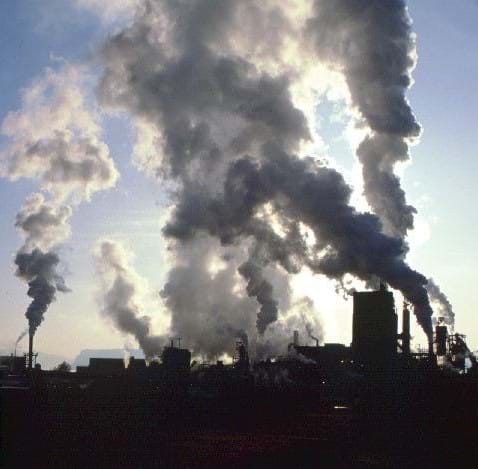
In Al Gore’s speech “Where do We Go from Here”, featured on TED.com, he makes it clear that being optimistic to the situation of global warming is not enough. Some statistics he shares are that 68% of America’s population does believe that human activity is responsible for global warming, however when provided with a list of issues and things the President along with Congress need to address, global warming is at the bottom of the list. He also provides us with a mental picture when he explains how most of the carbon on Earth has been leached out of the atmosphere into the ground over thousands of years in forms of plant life and fossil fuels. With this being said the Earth’s average temperature is 59°F and Venus, Earth’s neighbor containing an equal amount of carbon, has an average temperature of 855°F. This is because on Venus all of the carbon is in the atmosphere. Isn’t it ironic that in our current situation people are consuming and pumping more CO2 from the ground into the atmosphere than ever?
As important of a matter as this is, something that could affect humanity, how come it has not become a more urgent matter on the list of the government’s agendas? The problem is that people are all talk. Actions speak louder than words, thus apart from just being optimistic; we need to drastically change our behavior as well as the laws that tend to dictate our lives. Gore says, “In order to solve the climate crisis, we need to solve the democracy crisis.”
“We need world-wide mobilization for renewable energy, conservation, efficiency, and global transition to low a low carbon economy” (Gore). Along with the massive amounts of CO2 emissions from America and developed countries, what is scary is that developing countries are quickly catching up. Gore’s suggested a very helpful solution to the problem is put a tax on carbon. This along with more active participation in government, people with unity will have the voice and power they need to make their government do more.
Gore mentions how we are always learning in history about the great men and women who sacrificed so much and are responsible for everything America is today. Maybe it’s our time to step up to the plate and be a ‘hero’ as he calls it. We have had all the warning and information we could possibly need; we are aware of our problem, however rather than avoiding it and dreading facing it perhaps we need to look at it in a different light as Gore suggests. He asks, “How many generations in all of human history had the opportunity to rise to a challenge that is worthy of our best efforts?” We should be happy and honored to have been granted with the opportunity to be remembered and immortalized for paving the way for a better future for humanity. It’s time to take action. We now have a chance to do something great, it would be the biggest mistake of our lives should we let it pass by, literally, all of humanity may be at stake.
In the short yet very moving animation “The Man Who Planted Trees” the farmer was living proof that “Man could be as effective as God in things other than destruction.” A single man was responsible for revitalizing once dead land, creating an entire forest out of nothing. We can no longer afford to for granted the great deal of change one person can have.
Resources
Gore, Al . "Al Gore's new thinking on the climate crisis." TED Conferences, LLC. Monterey, California. Feb. 2008. Web. 8 Dec. 2009. <http://www.ted.com/talks/lang/eng/al_gore_s_new_thinking_on_the_climate_crisis.html>.
Animated Movie
“The Man Who Planted Trees”
Picture
Industrial Smog. 2008. Teachengineering.org National Science Digital Library . Web. Web. 8 Dec. 2009. <http://www.teachengineering.org/collection/cub_/lessons/cub_images/cub_air_lesson02_fig4.jpg>.
As important of a matter as this is, something that could affect humanity, how come it has not become a more urgent matter on the list of the government’s agendas? The problem is that people are all talk. Actions speak louder than words, thus apart from just being optimistic; we need to drastically change our behavior as well as the laws that tend to dictate our lives. Gore says, “In order to solve the climate crisis, we need to solve the democracy crisis.”
“We need world-wide mobilization for renewable energy, conservation, efficiency, and global transition to low a low carbon economy” (Gore). Along with the massive amounts of CO2 emissions from America and developed countries, what is scary is that developing countries are quickly catching up. Gore’s suggested a very helpful solution to the problem is put a tax on carbon. This along with more active participation in government, people with unity will have the voice and power they need to make their government do more.
Gore mentions how we are always learning in history about the great men and women who sacrificed so much and are responsible for everything America is today. Maybe it’s our time to step up to the plate and be a ‘hero’ as he calls it. We have had all the warning and information we could possibly need; we are aware of our problem, however rather than avoiding it and dreading facing it perhaps we need to look at it in a different light as Gore suggests. He asks, “How many generations in all of human history had the opportunity to rise to a challenge that is worthy of our best efforts?” We should be happy and honored to have been granted with the opportunity to be remembered and immortalized for paving the way for a better future for humanity. It’s time to take action. We now have a chance to do something great, it would be the biggest mistake of our lives should we let it pass by, literally, all of humanity may be at stake.
In the short yet very moving animation “The Man Who Planted Trees” the farmer was living proof that “Man could be as effective as God in things other than destruction.” A single man was responsible for revitalizing once dead land, creating an entire forest out of nothing. We can no longer afford to for granted the great deal of change one person can have.
Resources
Gore, Al . "Al Gore's new thinking on the climate crisis." TED Conferences, LLC. Monterey, California. Feb. 2008. Web. 8 Dec. 2009. <http://www.ted.com/talks/lang/eng/al_gore_s_new_thinking_on_the_climate_crisis.html>
Animated Movie
“The Man Who Planted Trees”
Picture
Industrial Smog. 2008. Teachengineering.org National Science Digital Library . Web. Web. 8 Dec. 2009. <http://www.teachengineering.org/collection/cub_/lessons/cub_images/cub_air_lesson02_fig4.jpg>
Flaws with GoodGuide
In class we have recently learned about an application for the iPhone, GoodGuide. The GoodGuide application allows people who download it to scan the items they want to purchase. Once scanned, GoodGuide gives you a rating on the product and measures how "green" it is. Is the product healthy for you, for your child, for the environment? GoodGuide can answer all these questions for you, it even provides the cost of the product and a list of other products with which to compare. The products range from bottled water, to personal care products, to toys for your children.
The merits of this application are apparent, it has now been made easy for consumers to shop while being environmentally conscious. Using our phones we can take a picture of a bar code and GoodGuide will give us information that will (hopefully) make us think twice about what we purchase.
Despite the benefits of this new found green shopping mentality, there are flaws to GoodGuide. For example, a survey conducted in 2007 by the CTIA- Wireless Association showed that 82% of people living in the United States own a cellphone (http://www.gearlog.com/2007/11/us_cellphone_penetration_tops.php).
Although this is an overwhelming majority, what about the other 18% of the population living in the United States? One of the major themes we have covered in class is the importance of saving others, because this will make it easier to save yourself. A reading from class, "Jevons Paradox" by Jeff Dardozzi, reinforce the idea that saving yourself is probably not the effective solution. Dardozzi writes about the "rebound effect," meaning that while one person is being environmentally conscious and may change their life to become less pollutant, another person is carrying their life in the same way as before. In effect, people who will not change their lifestyles to be more environmentally friendly will "cancel out" the efforts of those who do live that way. Although GoodGuide is a wonderful application for those to access to it, we need to think about those who do NOT have access to it.
In addition, as an owner of an iPod Touch, I do have access to the GoodGuide application. But because my iPod Touch is just an iPod and not a phone, I cannot take a picture of a bar code. I must wait for the application to load (a process that takes a few minutes when you first open it) and manually search different categories to find the product I am looking for. As for the 82% of people in the United States with a cellphone, it would be ridiculous to assume that they all have and iPhone or an iPod Touch. People with phones that are not considered "pocket computers" (i.e. smart phones) are also at a disadvantage. Their access to this application is limited.
It is also important to consider people in developing countries. Poverty tends to be a characteristic that developing countries share, not only are large portions of the population cellphone-less, but because they cannot afford a smart phone they would certainly not have access to an iPhone. We must remember that saving the world is a group effort. Although we must think locally to fix our solutions we are a global community. Thinking locally will only be effective if every part of the world is thinking locally and doing everything they can to eliminate waste and reduce dependency on oil.
The merits of this application are apparent, it has now been made easy for consumers to shop while being environmentally conscious. Using our phones we can take a picture of a bar code and GoodGuide will give us information that will (hopefully) make us think twice about what we purchase.
Despite the benefits of this new found green shopping mentality, there are flaws to GoodGuide. For example, a survey conducted in 2007 by the CTIA- Wireless Association showed that 82% of people living in the United States own a cellphone (http://www.gearlog.com/2007/11/us_cellphone_penetration_tops.php).
Although this is an overwhelming majority, what about the other 18% of the population living in the United States? One of the major themes we have covered in class is the importance of saving others, because this will make it easier to save yourself. A reading from class, "Jevons Paradox" by Jeff Dardozzi, reinforce the idea that saving yourself is probably not the effective solution. Dardozzi writes about the "rebound effect," meaning that while one person is being environmentally conscious and may change their life to become less pollutant, another person is carrying their life in the same way as before. In effect, people who will not change their lifestyles to be more environmentally friendly will "cancel out" the efforts of those who do live that way. Although GoodGuide is a wonderful application for those to access to it, we need to think about those who do NOT have access to it.
In addition, as an owner of an iPod Touch, I do have access to the GoodGuide application. But because my iPod Touch is just an iPod and not a phone, I cannot take a picture of a bar code. I must wait for the application to load (a process that takes a few minutes when you first open it) and manually search different categories to find the product I am looking for. As for the 82% of people in the United States with a cellphone, it would be ridiculous to assume that they all have and iPhone or an iPod Touch. People with phones that are not considered "pocket computers" (i.e. smart phones) are also at a disadvantage. Their access to this application is limited.
It is also important to consider people in developing countries. Poverty tends to be a characteristic that developing countries share, not only are large portions of the population cellphone-less, but because they cannot afford a smart phone they would certainly not have access to an iPhone. We must remember that saving the world is a group effort. Although we must think locally to fix our solutions we are a global community. Thinking locally will only be effective if every part of the world is thinking locally and doing everything they can to eliminate waste and reduce dependency on oil.
Subscribe to:
Posts (Atom)